Cuánta cúrcuma se puede tomar sin problemas
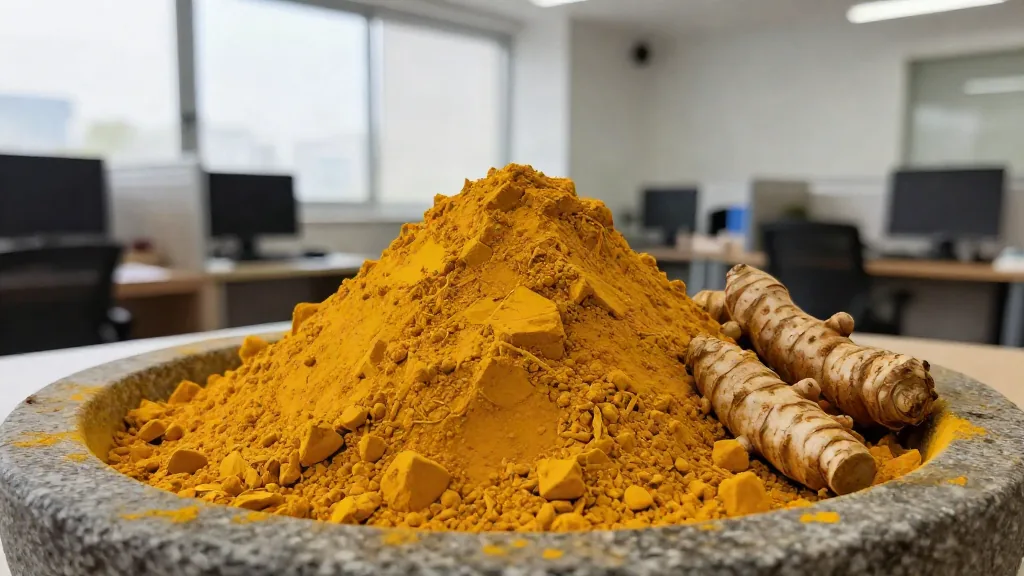
Investigando sonbre la cúrcuma, leo lo siguiente en la sociedad americana del cáncer:
One study of 15 patients with colorectal cancer was done to find out how much curcumin they could safely take, and whether they could take a dose large enough to even be detected in the blood. The patients were able to take 3.6 grams of curcumin without noting ill effects. At this high dose, some curcumin and its products were found in the blood.
Small studies have found most people in study groups were able to take up to 10 grams of curcumin per day for a period of a few weeks without noticing problems other than the large volume of pills.
then gave 2 to 4 grams of curcumin a day to 44 smokers. After a month on the curcumin, the researchers did second colonoscopies and biopsies to see if there was a lower concentration of pro-carcinogenic substances in the colon and rectum. The compounds were at the same level as they were before the study. But the smokers who took 4 grams of curcumin a day had fewer abnormal crypt foci after the study, while the smokers who took 2 grams a day had the same number as before
Según esto, dosis interesantes desde 4g/día hasta 10g/día. Es posible cubrir esto sin suplementación? Este estudio http://www.ncbi.nlm.nih.gov/pubmed/17044766 nos dice que el contenido de cúrcuma (curcumin, el principio activo) en cúrcuma (turmeric, la raíz) es el 3,14%, así que harían falta mínimo 115g de polvo de raíz/día, lo cual lo hace bastante inviable. Por tanto, hay que asegurarse de comprar el principio activo (curcumin powder) y no la raíz (turmeric powder). Por supuesto los fabricantes juegan al despiste con las palabras turmeric/curcumin. Una forma de paliarlo es buscar la proporción de curcuminoids (curcumin y derivados). Parece que una formulacion típica de curcuminoids es al 95%: http://www.iherb.com/Now-Foods-Curcumin … 0&lc=en-US
Así que la referencia que nos da NowFoods es 80g (75g de curcumin) 30 dólares (en pastillas).
Yo estoy usando esta…
Estoy tomando gramo y medio, asi que poca ostia! Muy interesante lo que cuestas… voy a ver mas estudios, pero veo que lo razonable seria 4-5 gramos en ciclos de 2 meses, por ejemplo 2 meses cada 6 meses o algo asi.
La curcuma es gentoxica y puede producir parkinson o incrementar las posibilidades, eso son los peligros, luego hay 500 efectos beneficiosos, por lo que compensa mucho, tenia un familiar con tumor cerebral al que le dio curcuma el medico, voy a preguntar la dosis, pero le dijo que hiciese ciclos de dos meses, creo…. confirmo, claro que no es un remedio milagroso, si lo fuese no diria tenia, por supuesto, pero si en general reduce el numero de celulas pre-cancerigenas en el cuerpo, es algo muy bueno como prevencion, tengo que mirar mas estudios al respecto.
Ademas es un anti-inflamatorio muy potente, lo cual es muy interesante, ya que la mayoria de las enfermedades cronicas tienen que ver con la inflamacion.
Es muy curioso eso que dices de que el curcumin podría inducir parkinson, porque últimamente hay el runrún de que el cáncer y las enfermedades del sistema nervioso (parkinson, alzheimer…) se inhiben una a la otra!
En todos los articulos que leo consideran que la especia curcuma es igual a curcumina: http://www.complejob.net/2011/08/curcum … llada.html
Y por lo tanto equiparan los estudios con curcumina con tomar la misma cantidad de dicha especia, incluso dicen que los paises que consumen curries diversos tienen menos incidencias de determinadas enfermedades, habria que buscar fuentes, es interesante.
http://www.drweil.com/drw/u/QAA400915/C … meric.html
Population studies have shown that elderly villagers in India appear to have the lowest rate of Alzheimer’s disease in the world, and researchers have speculated that the anti-inflammatory effects of curcumin may be partly responsible.
-Turmeric extract worked as well as a non-steroidal anti-inflammatory drug for treatment of osteoarthritis of the knee in a study published in the August 2009 issue of the Journal of Alternative and Complementary Medicine.
-Laboratory studies suggest that curcumin acts as a weak phytoestrogen and seems to have cancer protective effects.
-Lab studies have also shown that curcumin induces programmed death of colon cancer cells, and clinical trials are investigating the use of curcumin in treatment of colon cancer.
-Curcumin suppresses microinflammation in the GI tract associated with inflammatory bowel disease.
I frequently recommend turmeric supplements, and I believe whole turmeric is more effective than isolated curcumin for inflammatory disorders, including arthritis, tendonitis, and autoimmune conditions. Take 400 to 600 milligrams of turmeric extracts (available in tablets or capsules) three times per day or as directed on the product label. Look for products standardized for 95% curcuminoids. Neither curcumin nor turmeric taken orally is well absorbed unless taken with black pepper or piperine, a constituent of black pepper responsible for its pungency. When shopping for supplements, make sure that the one you choose contains black pepper extract or piperine. (If you’re cooking with turmeric, be sure to add some black pepper to the food.). Be patient when taking turmeric supplements: the full benefits may not be apparent for eight weeks.
Asi que hay que user pimienta negra tambien!
http://www.ncbi.nlm.nih.gov/pubmed/17569205
Curcumin exhibits activities similar to recently discovered tumor necrosis factor blockers (e.g., HUMIRA, REMICADE, and ENBREL), a vascular endothelial cell growth factor blocker (e.g., AVASTIN), human epidermal growth factor receptor blockers (e.g., ERBITUX, ERLOTINIB, and GEFTINIB), and a HER2 blocker (e.g., HERCEPTIN). Considering the recent scientific bandwagon that multitargeted therapy is better than monotargeted therapy for most diseases, curcumin can be considered an ideal "Spice for Life".
Yo creo que la razón de estos malentendidos es que habitualmente se habla de un nutriente/alimento pero no de su dosis. El mismo nutriente/alimento puede ser altamente beneficioso o altamente perjudicial dependiendo sólo de la dosis, así que es imprescindible tenerla en cuenta. Hablar de algo sin especificar la dosis es no decir nada. Un ejemplo es el de las grasas, ha calado el mensaje de que grasas saturadas malas y aceite de oliva virgen extra es dios, cuando la realidad es que las grasas saturadas son necesarias en su justa medida (20% del total de las grasas ingeridas) y añadir aceite de oliva a todo bajo el paradigma "oro líquido" es negativo (no debería pasar del 40% del total de grasas). Los fabricantes suelen sacar partido de esto, por ejemplo con el omega3. Debería representar el 10% del total de grasas, entre 5 y 10 gramos al día. Dentro de los O3, los interesantes son EPA+DHA. El alfa-linoléico, presente en las semillas, no es tan interesante como los otros, aunque sí sirve para balancear el ratio O3:O6. Los fabricantes suelen añadir entre 0.03 y 0.3 gramos de EPA+DHA por ración, lo cual es poco relevante si el objetivo es 5-10 gramos (el salmón aporta 2.5g por ración de 150g), pero aun así se hace.
Me resulta muy curioso… dice: Curcumin exhibits activities similar to recently discovered tumor necrosis factor blockers (e.g., HUMIRA, REMICADE, and ENBREL)
Es sabido que estos medicamentos que bloquean el TNF-alfa tienen el gran problema de que incrementan muchisimo la probabilidad de tener cancer, ya que el TNF-Alfa ademas de ser el mensajero del ataque al propio organismo en algunas enfermedades autoinmunes, tambien es el mensajero que mata las celulas cancerigenas.
Pero el Turmeric al parecer bloquea el TNF-Alfa siendo beneficioso para los que padecen ciertas enfermedades autoinmunes, pero ademas protege muchisimo contra muchos tipos de cancer.
Y esas solo son unas pocas de sus virtudes, tambien hay estudios que afirman que es tan buen anti-inflamatorio como el ibuprofeno, pero sin sus efectos secundarios, e incluso tan eficaz como los cortico-esteriodes! Lo cual lleva a prevenir muchas enfermedades como el Alzehimer (Que es una inflamacion del tejido cerebral)
Siendo asi, no comprendo como no lo consume la inmensa mayoria de la gente aunque solo sea por prevenir enfermedades autoinmunes, cancer, Alzehimer etc…
http://www.ncbi.nlm.nih.gov/pubmed/17569213
In this review, we discuss evidence that supports the regulation of COX and LOX enzymes by curcumin as the key mechanism for its beneficial effects in preventing various inflammatory diseases.
http://www.ncbi.nlm.nih.gov/pubmed/22069551
Based on this, curcumin could thus be considered as a good candidate for cancer prevention and treatment when used alone or in combination with other conventional treatments.
Cuidado con esto: http://www.ncbi.nlm.nih.gov/pubmed/23116309
However, various basic and clinical studies elucidate curcumin’s limited efficacy due to its low solubility, high rate of metabolism, poor bioavailability and pharmacokinetics.
Pero… http://www.ncbi.nlm.nih.gov/pubmed/20683505
Curcumin has the ability to inhibit carcinogenic promotion of colorectal cancer through the modulation of multiple molecular targets such as transcription factors, enzymes, cell cycle proteins, cell surface adhesion proteins, survival pathways and cytokines. A number of clinical trials dealing with curcumin’s efficacy and safety revealed poor absorption and low bioavailability. Different factors contributing to the low bioavailability include low plasma level, tissue distribution, rapid metabolism and elimination from the body. Although, curcumin poor absorption and low systemic bioavailability limit its translation into clinics, some of the methods for its use can be approached to enhance the absorption and achieve a therapeutic level of curcumin.
Lo que nos lleva a: http://www.ncbi.nlm.nih.gov/pubmed/9619120
Concomitant administration of piperine 20 mg/kg increased the serum concentration of curcumin for a short period of 1-2 h post drug. Time to maximum was significantly increased (P < 0.02) while elimination half life and clearance significantly decreased (P < 0.02), and the bioavailability was increased by 154%. On the other hand in humans after a dose of 2 g curcumin alone, serum levels were either undetectable or very low. Concomitant administration of piperine 20 mg produced much higher concentrations from 0.25 to 1 h post drug (P < 0.01 at 0.25 and 0.5 h; P < 0.001 at 1 h), the increase in bioavailability was 2000%. The study shows that in the dosages used, piperine enhances the serum concentration, extent of absorption and bioavailability of curcumin in both rats and humans with no adverse effects.
Por lo tanto el consumo de pimienta negra (20 mg) entre 15 minutos y una hora despues de consumir curcumina (2 gramos) multiplica por 20 la biodisponibilidad de esta!
Otros metodos: http://www.ncbi.nlm.nih.gov/pubmed/17999464
Phase I clinical trials have shown that curcumin is safe even at high doses (12 g/day) in humans but exhibit poor bioavailability. Major reasons contributing to the low plasma and tissue levels of curcumin appear to be due to poor absorption, rapid metabolism, and rapid systemic elimination. To improve the bioavailability of curcumin, numerous approaches have been undertaken. These approaches involve, first, the use of adjuvant like piperine that interferes with glucuronidation; second, the use of liposomal curcumin; third, curcumin nanoparticles; fourth, the use of curcumin phospholipid complex; and fifth, the use of structural analogues of curcumin (e.g., EF-24). The latter has been reported to have a rapid absorption with a peak plasma half-life. Despite the lower bioavailability, therapeutic efficacy of curcumin against various human diseases, including cancer, cardiovascular diseases, diabetes, arthritis, neurological diseases and Crohn’s disease, has been documented.
Sobre la pimienta: http://www.ncbi.nlm.nih.gov/pubmed/17987447
Piperine’s bioavailability enhancing property is also partly attributed to increased absorption as a result of its effect on the ultrastructure of intestinal brush border. Although initially there were a few controversial reports regarding its safety as a food additive, such evidence has been questionable, and later studies have established the safety of black pepper or its active principle, piperine, in several animal studies. Piperine, while it is non-genotoxic, has in fact been found to possess anti-mutagenic and anti-tumor influences.
@firehand, muy interesante lo del Omega-3, lo tendre en cuenta, yo suelo tomar 1-2 gramos al dia via suplementos, mas aceite extra de oliva, nueces y consumo salmon habitualmente, yo creo que los 5-10 gramos los suelo alcanzar, pero viendolo asi, el suplemento que tomo, tampoco es que sea la panacea, solo suma un poquito mas…
Por cierto un nuevo anti-inflamatorio natural muy potente es Anatabloc de Star Scientific, parece que hace maravillas entre los que lo consumen, habra que investigarlo, no he podido ver como conseguirlo en UAE.
Aqui tenemos un monton de links a estudios sobre los efectos beneficiosos de la curcumina: http://selfhacked.com/2013/06/11/curcum … eferences/
Curcumin shows activity (in a mix of in vivo and in vitro studies) in esophageal cancer, lung cancer, melanoma, lymphoma, breast cancer, leukemia, bone cancer, brain cancer, prostate cancer, and oral cancer. And this is just a sampling of the literature.
It seems that curcumin’s effects are mediated by a variety of factors, ranging from a reduction in Bcl-2 (an anti-apoptotic protein), inhibition of STAT-3 and NF-kappaB, increased ROS production in cancer cells, suppression of telomerase activity, and increased T cell efficacy.
Curcumin protects the liver against ethanol, may heal dry eye disease, prevents acetominophen toxicity, protects against selenium, mercury, and arsenic toxicity, has shown efficacy against arthritis, may prevent cataracts, may reduce sickness-associated inflammation, reduces liver inflammation, may have efficacy against inflammatory bowel disease, reduces inflammation in prostatitis, reduces damage due to ischemia/reperfusion, reduces the effects of traumatic brain injury (both in preventative and treatment capacities), increases glutathione, and improves neuron survival in spinal cord injury.
Curcumin prevents stress-induced reductions in 5-HT1A and BDNF in the cortex and hippocampus, normalizes stress-induced increases in TNF-alpha and IL-6, reduces stress-induced increases in serum corticosterone, negates stress-induced downregulation of GR expression, restores disturbed 5-HT circadian rhythm consequent to ethanol withdrawal, increases BDNF and CREB, shows considerable antidepressant efficacy, and may directly or indirectly be a 5-HT1A/1B agonist and 5-HT2C antagonist.
Curcumin has hypoglycemic action, likely by a combination of reducing insulin sensitivity and increasing pancreatic insulin output; the compound may thus have anti-diabetic activity. Moreover, curcumin activates AMPK (leading to improved glucose uptake in muscle), suppresses adipogenesis, inhibits adipocyte differentiation, stimulates skeletal muscle proliferation (with a “striking” effect on myogenesis), speeds healing after injury, improves insulin and leptin signaling, increases PPAR-alpha expression, and reduces both LDL cholesterol and triglycerides.
Curcumin potentiates the immune system, prevents against genotoxic effects of flouride and arsenic, prevents and treats gastric ulcers, reduces DA cell death upon administration of DA neurotoxin (and do so through more than just anti-inflammatory pathways), reduces tolerance to morphine, provides neuroprotection against glutamate excitotoxicity, shows anti-fungal properties, shows anti-viral properties, is a vitamin D receptor agonist, and may reduce certain types of hyperalgesia.
Y problemas:
In short, there is a speck of evidence to suggest curcumin could increase Parkinson’s risk and there is some [controversial] evidence that may suggest curcumin could cause genotoxic damage. Moreover, like other ROS scavengers, excessively high doses of curcumin may actually create ROS. It is not clear if these are the same doses as used in the cancer studies.
Aquí se puede consultar el estudio completo que apunta la inhibición del TNF-alfa y que contiene 957 referencias a otros estudios!:
http://charakinternational.com/pdfs/Agg … n-Ch-1.pdf
En una parte dice:
curcumin modulates the action of TNF, a growth factor for tumor cells
y apunta al siguiente estudio completo:
http://onlinelibrary.wiley.com/doi/10.1 … 800.x/full
en otra parte:
curcumin downregulates the expression of various inflammatory cytokines, including TNF
y en otra:
curcumin has been shown to inhibit the action of TNF, one of the most pro-inflammatory of the cytokines.
con estudios como éste:
http://curcuminresearch.org/PDF/Curcumin.pdf
En la siguiente página: http://curcuminresearch.org/ hay muchos estudios completos en el apartado publications. Me llama la atención que varios hacen referencia a que la cúrcuma induce la apoptosis, que es una forma de muerte celular más suave que la que provocan los TNF. Así que es posible que lo que haga la cúrcuma es inhibir la necrosis (que es proinflamatoria y agresiva, una especie de alerta roja) y promover la apoptosis, con lo que se explicaría que sea antiinflamatoria y que a la vez ayude a paliar el cáncer (pero no que lo cure en solitario, ya que la apoptosis no sería lo suficientemente agresiva).
Estos venden la suya propia, pero cuentan las desventajas de usar pimienta y otras muchas cosas a tener en cuenta al comprar curcumina:
Parece ser que el piperine, interfiere con muchos medicamentos, y por eso puede ser peligroso, hay que investigarlo…
Esta es la curcumina recomendada en el blog de selfhacked, y que en teoria tiene una mayor biodisponibilidad y capacidad para atravesar la barrera sangre-cerebro:
http://www.longvida.com/Questions-to-As … cumin.html
Que es bastante mas cara que la habitual, sale por 50 USD por 30 gramos:
http://www.amazon.com/Longvida-Optimize … B004ZLM986
No tengo muy claro si esta es lo mismo, por 38.5 USD los 30 gramos:
http://www.amazon.com/Curcumin-Longvida … 003D0A8Q0/
Aunque hay otras mas baratas que prometen alta biodisponibilidad:
http://www.amazon.com/Life-Extension-Bi … 000X9P5GM/
No se hasta que punto los reviews son verdaderos…
La patente del primer enlace se puede consultar aquí: http://pdfpiw.uspto.gov/.piw?Docid=0832 … first+page
Me llama la atención lo siguiente:
1. La gráfica patentada no se corresponde con ninguna de las dos que hay en la web.
2. Entre la primera y la segunda grafica hay una diferencia notable. En la primera la concentración es en forma de pico y en la segunda es casi plana. Tratándose del mismo producto… ¿cómo se justifica ese resultado? Lo más gracioso es que dice: "The most common additives, piperine and lecithin, are shown to spike blood levels of curcumin." Y su gráfica patentada es esta:
3. El estudio fue hecho con nueve voluntarios (no dice por quién, así que se supone que por el inventor).
4. Mirando los datos de las distintas concentraciones en sangre en función de la proporción de aceite, la mejor es 12.9:1. Sin embargo, en el producto final se utiliza 25:1, que ni siquiera aparece en el estudio. También me llama la atención que la concentración en el grupo de "sólo cúrcuma" aumenta o disminuye en una proporción casi idéntica al grupo de "cúrcuma con mayor biodisponibilidad", de tal forma que el ratio entre ambas se mantiene entre 7.0-7.3. Que la concentración de "sólo cúrcuma" varíe en cada muestreo es comprensible, pero que varíe en el mismo sentido y proporción que la "cúrcuma con mayor disponibilidad" ya es más extraño.
Estas particularidades siempre hacen que piense: si te has molestado en estudiar y patentar un producto porque sus características son interesantes… ¿por qué no presentas una información fehaciente y clara? Porque de esta forma pienso que me intentas vender la moto, y ante la duda voy a tirar de lo que está estandarizado, como es lógico.
Con los de Longvida más de lo mismo, los estudios que hay en su web son generales y el estudio interesante hay que pedírselo.