Ciberespionaje chino contra el armamento estadounidense
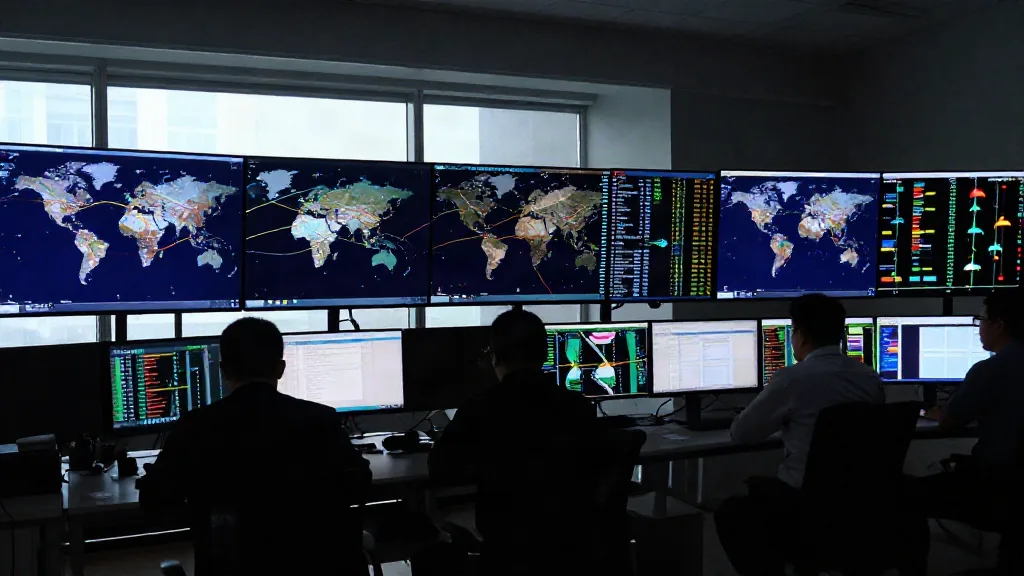
China’s Beijing-backed Internet Army has allegedly cyber-grabbed the designs of more than two dozen of America’s top weapons systems, broken into the e-mail accounts of reporters and editors at The New York Times, hijacked trade secrets from dozens of U.S. companies and swiped critical plans from the U.S. Federal Reserve.
Iran, Russia and several other countries have also assembled formidable cyber warfare forces, we said in that same special report.
Ellen Nakashima, a reporter for The Washington Post, told readers that the NIE report "describes a wide range of sectors that have been the focus of hacking over the past five years, including energy, finance, information technology, aerospace and automotives … the assessment does not quantify the financial impact of the espionage, but outside experts have estimated it in the tens of billions of dollars."
Also in mid-February, Mandiant Corp., a U.S.-based computer-security firm, claimed in a new report of its own that a surging number of cyber-attacks against the United States are linked to China’s People’s Liberation Army. According to the study, 141 U.S. companies have had their data breached or stolen since 2006.
The Syrian Electronic Army may not be on the "Most Wanted" list along with China and Iran, but it has been busy.
In April, for instance, SEA took control of The Associated Press Website and tweeted that President Obama had been injured in a White House bombing – a false story that caused the U.S. stock market to temporarily plummet by $136 billion.
Experts describe SEA as a "collective of hackers" who support the Assad regime and who don’t like how the Western media vilifies it. SEA has hack-attacked more than a dozen major media organizations, including the Qatar-backed Al Jazeera. In fact, the Syrian group often goes after Qatar-based organizations and officials, since that country has backed Syrian rebels.
At some point, the United States is going to experience a major cyber-strike.
Just this week, in fact, outgoing Homeland Security Secretary Janet Napolitano said that a massive and serious cyber-attack on the U.S. homeland is inevitable.
"Our country will, at some point, face a major cyber event that will have a serious effect on our lives, our economy, and the everyday functioning of our society," Napolitano said. "While we build systems, protections and a framework to identify attacks and intrusions, share information with the private sector and across government and develop plans and capabilities to mitigate the damage, more must be done, and quickly."
The DOD is excruciatingly vulnerable. It has 15,000 separate networks, and DOD computers receive roughly 6 million threatening probes a day.
The costs of this cyber-espionage are tough to quantify. According to one estimate, intellectual property theft of all types from U.S. companies is at least $250 billion a year. That’s far more than what those businesses pay in federal corporate income taxes.
In January, the Pentagon said it was looking to quadruple the size of its Cyber Command — expanding from the current 900 staffers to as many as 4,900 by late 2015, with most based at the new facility at Fort Meade, Maryland, which is located in the Washington, D.C., suburbs.
In February, just one month after the Cyber Command report surfaced, we found that a brand new National Intelligence Estimate (NIE) concluded that the United States "is the target of a massive, sustained cyber-espionage campaign that is threatening the country’s economic competitiveness."
China was identified as the chief culprit, although other reports have named Iran and Russia as key global cyber-combatants.
NIEs are classified documents that are prepared for U.S. policymakers and represent a consensus view of the U.S. intelligence community. The fact that an NIE was prepared on this particular topic underscores just how seriously the global cyber-hacking issue is being taken in Washington.