El asteroide 2012 DA14 como mina de metales
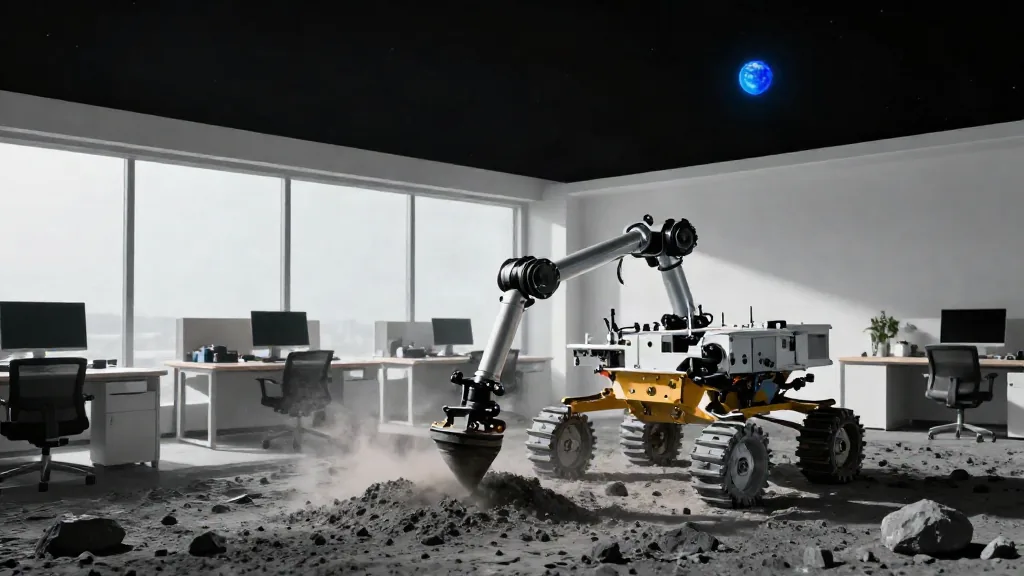
El posible impacto de un asteroide como el 2012 DA14 con la Tierra siempre será causa de temor, pero los recursos que albergan en su interior los convierten en una "mina de oro" valorada en miles de millones de dólares.
Esta es la estimación que hace la compañía estadounidense Deep Space Industries (DSI), que ha calculado que el asteroide que "ha rozado" nuestro planeta este viernes contiene 65.000 millones de dólares (48.000 millones de euros) en agua recuperable y 130.000 millones (97.700 millones de euros) en metales.
Unas cifras que podrían despertar una "nueva fiebre del oro" en un futuro no muy lejano, según dijo en entrevista Stephen Covey, director de desarrollo e investigación y fundador de DSI.
Covey afirmó que "el espacio es tan inmenso que hay para todos", pero aquellos asteroides que estén a una distancia más razonable de la Tierra serán a los que quieran los interesados.
La aventura no será fácil y el coste elevado, pero las posibilidades de estas rocas gigantes, compuestas de agua y metales como hierro, oro y platino, lleva a algunos a creer que el esfuerzo vale la pena.
Estos cuerpos celestes considerados los restos que quedaron después de la formación del Sistema Solar albergan "todo lo que nuestra civilización necesita para expandirse en el espacio y para proveer nuestras necesidades aquí y aumentar la riqueza de nuestra economía", según Covey.
Primer viaje en 2015
La compañía, que tiene previsto tener su propia flota de aparatos espaciales, ya tiene en su calendario su primera misión, en 2015, para hacer un viaje de reconocimiento a un asteroide.
Primero lanzarán unos pequeños satélites exploradores en una misión de solo ida, con una duración de entre dos y seis meses, para detectar posibles candidatos y estudiar su composición más de cerca.
La idea es utilizar la tecnología de los microsatélites de investigación (‘CubeSat’) que utilizan componentes electrónicos y no pesan más de un kilo.
Esperan contar para financiar esta misión con inversores y clientes como la agencia espacial estadounidense (NASA), así como compañías patrocinadoras.
En 2016 prevén realizar la primera misión con una nave espacial no tripulada, que podría durar entre dos y tres años, para recoger muestras y traerlas de vuelta para analizar su composición.
La compañía, que prevé contar al principio con naves de compañías espaciales privadas, está diseñando también sus propios modelos para crear un vehículo reutilizable que permita acercar a la órbita terrestre pequeños fragmentos de asteroides.
Un vehículo con tentáculos
El vehículo desplegará una especie de tentáculo metálico que desplegará unos cables para rodear el meteorito y arrastrarlo como si llevara una gran bolsa.
En un futuro no muy lejano, de unos 20 años, Covey augura que va a haber asentamientos humanos en diferentes puntos del Sistema Solar que harán uso de grandes plataformas de comunicaciones y estaciones de energía solar.
De momento ya hay dos compañías estadounidenses interesadas en explotar estos recursosDe momento ya hay dos compañías estadounidenses —DSI y Planetary Resources (en la que participa el cofundador de Google Larry Page)— interesadas en explotar estos recursos.
Está por ver si se trata de proyectos de ciencia ficción o la minería tiene como nuevo destino el espacio.
El profesor de ciencias planetarias del Instituto Tecnológico de Massachusetts (MIT), Richard Binzel, está de acuerdo en que con el tiempo los asteroides pueden ser explotados para obtener recursos y llegar a ser puntos de "operación de paso" para los viajes tripulados a planetas como Marte.
Asteroids are composed of water and metals, and every time one passes by the Earth, the opportunity to obtain its resources escapes. The company’s mission is to develop robotic spacecraft to analyze asteroids and mine them.
This may sound like a futuristic fantasy, but it’s not. The company already has the backing of such heavy hitters as Larry Page and Eric Schmidt of Google, and "Avatar" director James Cameron, and according to Diamandis, the first mission will take place in 20 months.
The prospecting and mining of asteroids will rely on the use of the company’s extremely light Arkyd-series spacecraft, which Diamandis characterized as "the smartphones of spacecraft." He said that they will remain in Earth’s orbit to detect and analyze asteroids that come close enough. They will then co-orbit with the asteroid and attach to it via one of "a multitude of attachment capabilities" that the company is now exploring, according to Diamandis. Afterward, they will extract the desired materials, and return to earth.
"Our primary business is looking at these asteroids as a resource to benefit humanity, with three major value propositions," he said. "The first is many of these asteroids are rich in water, and water is valuable for hydrogen and oxygen, which is effectively rocket fuel. A 75-meter asteroid, if it’s rich in volatiles, has enough water on board to fuel all 135 Space Shuttle missions."
The second category is platinum group metal-rich asteroids. "A single 500-meter LL chondrite has more platinum on it than has been mined in the history of humanity," he said. "Our goal is to go to asteroids, match their orbit, prospect them with cameras and imaging systems to clearly identify what they’re made of, and determine the percentage of platinum and gold palladium."
The third category is the asteroid with the potential to hit the Earth. "Of the millions of asteroids out there orbiting the sun, some small percentage actually comes close to the Earth," he said. "A thousand or so are about a kilometer in size, the size that killed the dinosaurs. If you develop asteroid mining capability, you can alter their trajectory and deflect these asteroids almost for free. It’s a side benefit."
Diamandis said that this capability is very close to reality. "We have contracts with DARPA [Defense Advanced Research Projects Agency] and NASA, and we’re developing highly autonomous systems," he said. "We’re flying hundreds of spacecraft over this decade, and we’re doing prospecting in about five years."
Only time will tell whether Planetary Resources ends up saving humanity from an extinction-level event, or simply mines enough precious metals to raise the country’s gross domestic product. Either way, the company has made the future a little bit brighter.ImageUploadedByTapatalk1361033239.861306.jpg
Until recently, the last time people talked about mining asteroids they were probably wearing tank tops and corduroy flares. It was all part of the Apollo-era optimism about living and working in space – and it collapsed along with Nasa’s budget some time in the 1970s. Now asteroid mining, though thankfully not the tank top, is back in fashion. But can it really work?
A new company called Deep Space Industries has announced ambitious plans to begin prospecting and mine near-Earth asteroids by 2020.
DSI plan to use small satellites known as Fireflies to prospect near-Earth asteroids in 2015, and Dragonflies, which will launch in 2016 and take 3-5 years to capture samples from asteroids. They say that commercial operations will begin by 2020.
An asteroid-hunting spacecraft was announced by Deep Space Industries of Santa Monica, California, on 22 January 2013. Photograph: DSI/Rex Features
They expect their first customers to be "scientific researchers and private collectors" although it is unclear how they plan to get the returned asteroid samples down to Earth’s surface.
According to David Gump, chief executive officer, speaking at the company’s launch in Santa Monica, California, another early goal is to refuel communications satellites. These will presumably be newly built comsats that include a refuelling interface. He also foresees Nasa as a potential customer, allowing DSI to tank up future Mars missions in orbit, before they set off to the red planet.
DSI is now a rival to Planetary Resources, Inc., which announced its asteroid ambitions in April 2012 and this week showed off a full-size model of a miniature space telescope that it will use to prospect asteroids remotely, rather than sending spacecraft to them.
If you are using a mobile device, click here to watch the Planetary Resources tech update.
Apart from the technical challenges in mining an asteroid, there is a question about the legality of a company effectively claiming an asteroid for itself. The 1967 Outer Space Treaty appears to make asteroid mining a difficult proposition based on at least the following principles:
Outer space is not subject to national appropriation by claim of sovereignty, by means of use or occupation, or by any other means;
States shall be responsible for national space activities whether carried out by governmental or non-governmental entities;
States shall avoid harmful contamination of space and celestial bodies.
However, Gump believes that the following clause gives companies such as DSI the right to "utilise" asteroids:
The exploration and use of outer space shall be carried out for the benefit and in the interests of all countries and shall be the province of all mankind.
I am sceptical about the practicality of asteroid mining, certainly by 2020. That doesn’t mean I don’t wish DSI and Planetary Resources good luck, but the magnitude of the task is daunting.
Take a look at the following figures:
Nasa is currently developing a mission called OSIRIS-Rex. Planned for launch in 2016, it will cost about $1bn and return between 60 grams and 2 kilograms of asteroidal material to Earth in 2023. DSI expects to be returning 20-45 kilograms (that’s at least 10 times as much!) with each Dragonfly mission. It expects to provide a three-spacecraft Firefly fleet for $20m.
The figures bear no comparison. If DSI pulls this off, space exploration will change forever, and questions would surely be asked about why Nasa missions cost so much for so little return.