B. Global City, la mejor zona en Manila?
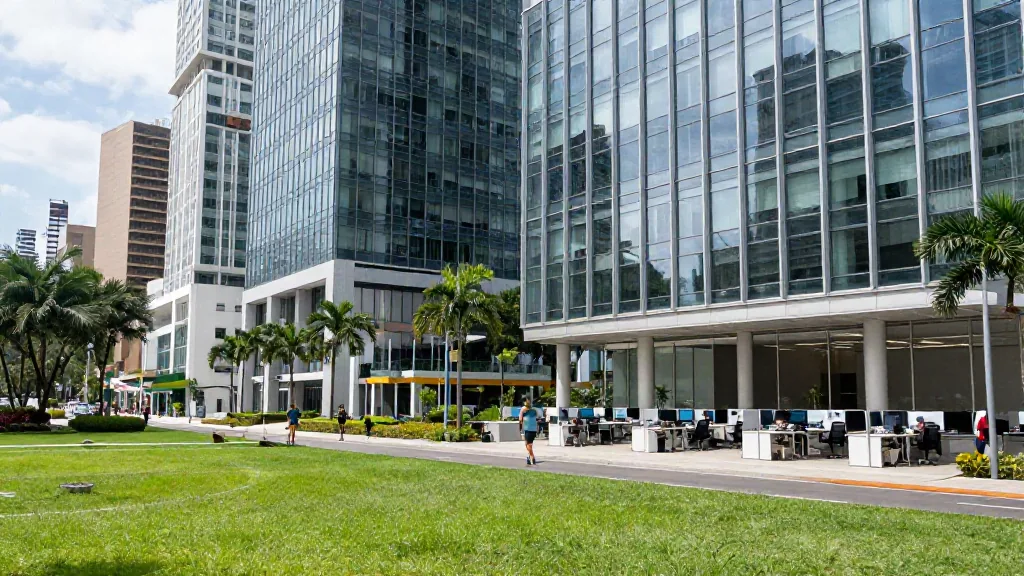
The ability of Ayala Land to develop business districts is really unparalleled. At the time Ayala Land bought the undeveloped Fort Bonifacio land, many thought that they had paid too much. But time has proven them right, and their long-term vision is now coming into fruition.
Just recently, it was reported that the Securities and Exchange Commission (SEC) will be moving to the Bonifacio Global City (BGC), in a two-hectare financial cluster which will also include the Bureau of Internal Revenue (BIR), Department of Finance (DOF), and the Bases Conversion and Development Authority (BCDA) (). The target groundbreaking date for the SEC building is November 11, 2012.
The construction of the Philippine Stock Exchange (PSE) building, though much delayed, is now slated to start this last quarter of 2012. The new PSE offices will be in the planned One Bonifacio High Street district, a 3.2-hectare, premium mixed-use block west of the existing Bonifacio High Street commercial strip.
Last August 2012, the Japanese government has approved a grant for the pre-feasibility of the 12.56-kilometer monorail project that would be open to the public, connecting BGC and other premier mix-use districts such as McKinley Hill, including North Bonifacio and Bonifacio South, Newport City and NAIA-3 with the existing MRT-3 in Guadalupe, Makati City. The target completion date of the monorail project is in 2016.
Also last August 2012, the University of the Philippines (UP) Professional Schools broke ground at BGC. BCDA donated a 4,300 square meter lot to UP at the northeast side of the Global City beside International School. A facility would be built to accommodate selected UP Diliman units such as the College of Law, College of Business Administration, College of Engineering, School of Statistics and also a UP Open University learning center.
With the impending transfer of key government financial offices and the PSE to BGC, plus the transfer of the UP Professional Schools and prestigious international schools and headquarters of international companies and the building of a monorail, it is very clear that BGC is the next major central business district of the country. Investing in real estate within BGC seems to be a very logical choice.
Visto en: http://www.foreclosurephilippines.com/2 … -rise.html
Mi experiencia es que Global City y Mckinley Hills, son los lugares por excelencia para expatriados trabajando en Manila, urbanizaciones de lujo muy cerca del distritu financiero, discotecas, restaurantes, etc… Asi como McKinley Hills, que es donde estan las grandes empresas como Reuters y muchisimas embajadas, todo con una seguridad excelente, lo unico que le falta es el monorail y una universidad para que sea el lugar perfecto!
Then and Now: A Brief Snapshot Of The Bonifacio Global City
Posted: 19 Mar 2013 09:30 AM PDT
I remember when I first saw Bonifacio Global City (BGC) back in 2006 when only a handful of developments could be seen in the area – a stark contrast to the present-day bustling district that it is. For quite some time, the BGC district served as my home and I was able to witness its transformation into one of the premier emerging urban districts (EUD) in Metro Manila today.
Prior to 2006, the BGC was host to only two office developments with a consolidated office space of approximately 39,000 sqm. From 2002 to 2005 there was a lull in office development in the district but construction picked up starting in 2006 when an additional 29,000 sqm was added to the existing stock. Between 2006 and 2012, approximately 510,000 sqm of office space entered the district, outpacing the supply in Makati and Ortigas CBDs. In the coming years this trend is expected to continue as the district is projected to account for around 43% of the total upcoming office supply in Metro Manila.
The growth of residential developments in the district has outpaced that of the office sector. Early residential developments were mostly in the high-end and luxury segment such as the Pacific Plaza Towers, Essensa, and Regent Parkway, among others, while subsequent years were dominated by the mid-end segment. The years 2009 and 2010 were banner years for the Philippine residential market, when approximately 2,600 and 4,000 units respectively were supplied by the BGC district alone. In the next three years, the district is expected to add around 8,700 residential units to the total existing stock.
Approximately 180,000 sqm of shopping space is present in the district – a mix of a multi-level shopping mall and lifestyle centres. In the next three years an estimated 237,000 sqm of shopping space is expected to be added to the stock, serving as complementary developments to the nearby office and residential buildings.
The growing prominence of the BGC as a business hub eventually attracted hotel operators/developers to pursue hotel projects in the district. It was only in 2011, however, when the first hotel development (F1 Hotel managed by Best Western Premier) in the district opened but several prominent hotel developments are expected to follow suit, namely, Ascott, Shangri-La Hotel and Grand Hyatt. Altogether, these three hotels are expected to provide around 1,200 rooms by 2015.
One does not have to look far to see the significant changes that have occurred in the property landscape of the BGC district in only a relatively short span of time. Although I must admit that I miss the pockets of open spaces and the leisure drives that the former area offered, I am excited with the rapid pace of development in the district which is a good indication of the progress of, and the potential for, the BGC district in the years to come.
About the author
Janlo de los Reyes is the Senior Research Analyst for Jones Lang LaSalle in the Philippines