Sustitutos de la leche
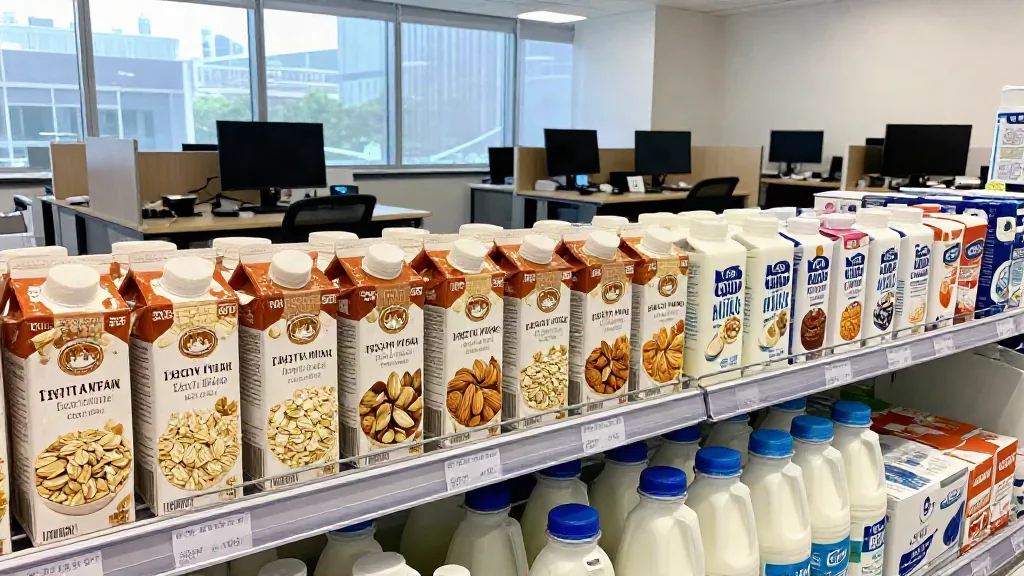
Desde hace tiempo que intento evitar la leche, por motivos diversos, como que tengo muchos anticuerpos hacia sus proteinas y que me causa inflamacion intestinal, aunque las pruebas de intolerancia a la lactosa me dieron negativas, lo cierto es que creo que a las bacterias de mi colon no les gusta mucho la lactosa (es decir se desequilibran) y me produce una irritacion que se aprecio en la colonoscopia que me hice recientemente.
En general la leche se suele tomar por el calcio que tiene, realmente la deficiencia de calcio suele venir por deficiencia de Vitamina D, la cual es indispensable para la absorcion del calcio, el brocoli por ejemplo es una fuente de calcio muy saludable.
Las proteinas de la leche son inflmatorias y el sistema inmune las suele considerar con enemigas cuando pasan a la sangre debido a la permeabilidad intestinal tan tipica en los dias actuales, las proteinas de la leche se asemejan a otras proteinas del cuerpo humano y esto suele llevar a enfermedades auto-inmunes donde el sistema inmune crea anticuerpos contra las proteinas de la leche (U otras proteinas) y estos acaban atacando tejido propio que se asemeja en la estructura.
Los cafés con leche de soja siempre me habían parecido asquerosos, pero la verdad es que la de starbucks está muy rica, la prefiero a la normal, y la marca que usan aquí es Alpro.
Aunque la soja tiene muy mala prensa y prefiero abusar.
He probado otros sustitutos como de almendra y de arroz, pero la mejor con diferencia es la koko, no sabe a coco, sabe a leche, incluso mi hija de 2.5 años cuando se la damos a probar dijo que era leche.
Sobre la soja:
The following is a list of some of the components of soy that make it particularly problematic.
Protease inhibitors. Soy is often consumed as an alternate source of protein. The issue here is that soy contains something called protease inhibitors. Protease is the pancreatic enzyme that allows for the breakdown and digestion of protein. Thus, the protease inhibitor component of soy actually inhibits the protein it contains from being accessible to the human body. Furthermore, foods containing protease inhibitors overburden the pancreas, as it desperately tries to pump out more of the enzymes that are being blocked.5,6
Phytates. Phytate containing foods, such as soy, are considered “anti-nutrients” not simply because they are devoid of nutrients, but because the phytates in the food actually bind tightly to minerals (e.g. calcium, magnesium, copper, iron, and zinc), thereby blocking their absorption into the body. Consistently eating a big hunk of tofu with some whole grains is a sure fire way of making yourself mineral deficient and developing ailments like osteoporosis, anemia, rickets, immune deficiencies, etc.5,6,7 Mixing tofu with some veggies? The phytates in the tofu will halt the absorption of the minerals in the veggies as well. This is a serious and real problem.
Lectins. Lectins injure the gastrointestinal lining, thereby contributing to leaky gut. In fact, pathological lesions develop in animals injected with kidney bean extract (legumes in general are high in lectins).7 This is because lectins agglutinate (adhere or stick). In your gut, they stick like glue to the lining of your small intestine, eventually damaging it enough to pass through (along with other particles) into your bloodstream. Once the flood gates are open, these lectins are now free to stick to other tissues in your body (e.g. your thyroid).7,8 As noted by Cornell University’s Department of Animal Sciences: “When given orally to experimental animals, lectins interact with the mucosa of the gastrointestinal tract causing acute gastrointestinal symptoms, failure to thrive and even death.” It is also believed that lectins negatively alter the function and properties of cell membranes.7 In short: you definitely don’t want to mess around with these guys.
Phytoestrogens. Soy’s Effect on Reproductive Health. Soy contains compounds called phytoestrogens (plant estrogens) that mimic the body’s own estrogen and lower testosterone levels. These phytoestrogens have the ability to attach to the body’s estrogen receptor sites. Because of this, soy is an endocrine disruptors (even moreso than BPA). High consumption of soy has been linked to infertility, including lowered sperm count in men, and changed sex hormone status.9
Goitrogenic. Soy is goitrogenic, meaning it promotes the formation of goiter, an enlarged thyroid, and suppresses thyroid function in general. The thyroid may be especially vulnerable to soy if paired with a deficiency in iodine or a preexisting thyroid disease. The agent in soy that appears to be most destructive against the thyroid are the isoflavones. Dr. Mike Fitzpatrick, an internationally known expert on soy, has implored that manufacturers at least remove the isoflavones from infant soy formula. Studies have indicated that autoimmune thyroid disease is more likely to be found in children who have been fed soy-based infant formula.9
Fuentes:
1. http://en.wikipedia.org/wiki/Soybean#United_States
2. http://www.ncsoy.org/ABOUT-SOYBEANS/His … beans.aspx
3. http://www.soyinfocenter.com/HSS/produc … trade2.php
4. http://www.huffingtonpost.com/jeffrey-s … 44575.html
5. http://www.acupuncturetoday.com/mpacms/ … p?id=32326
6. Dr. Kaayla Daniels: “Myths and Truths about Vegetarianism” Weston A Price Conference, Detroit.
7. http://www.ansci.cornell.edu/plants/tox … ctins.html
8. http://www.marksdailyapple.com/lectins/#axzz2OaXZEkOj
9. http://thyroid.about.com/cs/soyinfo/a/soy_2.htm
Fuente: http://onlinelibrary.wiley.com/doi/10.1 … x/abstract
Milk consumption: aggravating factor of acne and promoter of chronic diseases of Western societies
Consumption of cow’s milk and cow’s milk protein result in changes of the hormonal axis of insulin, growth hormone and insulin-like growth factor-1(IGF-1) in humans. Milk consumption raises IGF-1 serum levels in the perinatal period, adolescence and adulthood. During puberty with the physiological onset of increased secretion of growth hormone, IGF-1 serum levels increase and are further enhanced by milk consumption. IGF-1 is a potent mitogen; after binding to its receptor in various tissues, it induces cell proliferation and inhibits apoptosis.
The milk-induced change of the IGF-1-axis most likely contributes to the development of fetal macrosomia, induction of atopy, accelerated linear growth, atherosclerosis, carcinogenesis and neurodegenerative diseases. Observations of molecular biology are supported by epidemiologic data and unmask milk consumption as a promoter of chronic diseases of Western societies.
He encontrado un nuevo substituto de la leche, veremos que tal sabe!
Esta navidad mi mujer ha preparado un postre basado en chocolate puro y crema de coco y estaba genial, tambien helado basado solo en leche de coco y era delicioso!