Resveratrol, SIRT1 y envejecimiento
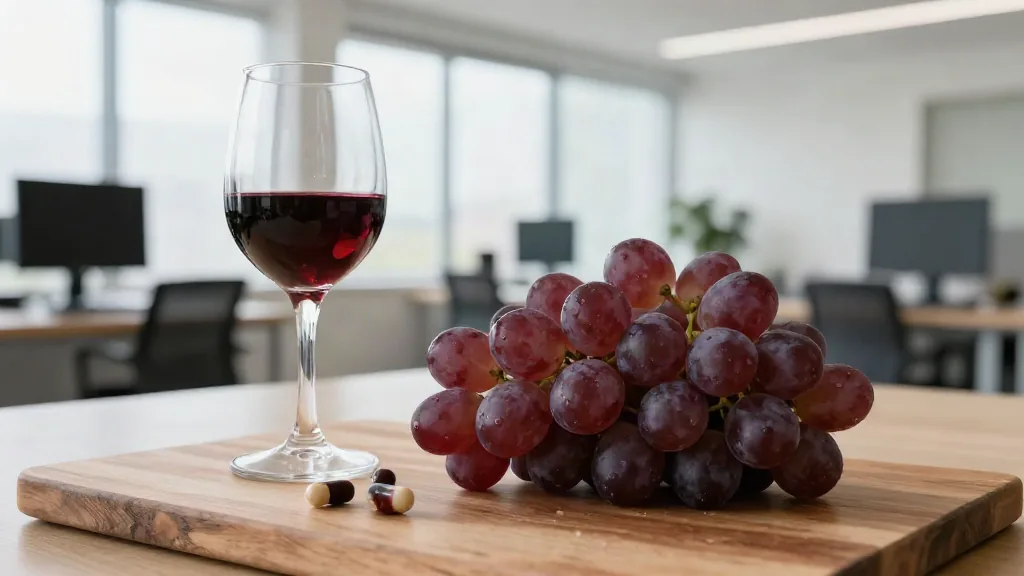
Es el resveratrol tan potente como dicen? En que dosis? Previene el envejecimiento?
After some debate, Harvard Medical School researchers are saying they have confirmed that compound resveratrol that’s found in red wine does provide anti-aging benefits.
The study, which was published on March 8 in Science, shows that resveratrol stimulates production of SIRT1, a serum that blocks diseases by speeding up the cell’s energy production centers known as mitrochondria.
Researchers have also figured out which gene allows resveratrol to produce SIRT1, and believe that some drugs currently in clinical trials may be able to provide the same anti-aging benefits as well.
"In the history of pharmaceuticals, there has never been a drug that binds to a protein to make it run faster in the way that resveratrol activates SIRT1," senior author David Sinclair, Harvard Medical School professor of genetics, said in a press release. "Almost all drugs either slow or block them."
Resveratrol is a naturally-occuring polyphenols antioxidant that is found in some plant products like grapes and cocoa. It is categorized as a phytoalexin, an antimicrobial compound that is produced by plants to protect them from rough environments like excessive ultraviolet light, infections and climate changes.
Resveratrol has been linked to protection against obesity and diabetes, a reduced risk for blood clotting and a way to lower "bad" LDL cholesterol, due to the compound’s ability to dilate blood vessels, increase nitric oxide and block the stickiness of platelets. However, some research came into question when Dr. Dipak K. Das, director of the cardiovascular research center at the University of Connecticut who led several reseveratrol studies, was accused of making up results in January 2013.
There was also a controversy behind whether SIRT1’s production was actually influenced by resveratrol. Earlier studies have used a man-made chemical group which glowed brighter the more SIRT1 activity went up. Without this chemical, the experiments didn’t work. Some scientists believed that because of this, it meant that SIRT1’s activity was only a laboratory construct and didn’t exist in nature.
"We had six years of work telling us that this was most definitely not an artifact," Sinclair, who initially published a study in 2006 linking resveratrol to SIRT1 and longevity in mice using that man-made chemical, said. "Still, we needed to figure out precisely how resveratrol works. The answer was extremely elegant."
To prove that there was a link between resveratrol and SIRT1, scientists discovered that the man-made chemical was actually close to three amino acids that were naturally found in cells, one of which is tryptophan, the chemical thought to make people drowsy after eating turkey. Instead of using the florescent chemical, researchers used a tryptophan residue in a test tube to see if it would create more SIRT1, which it did.
Then, Sinclair and his team looked at 2,000 mutants of the gene responsible for SIRT1 to find out how resveratrol worked, and found one mutation that stopped resveratrol’s effects by swapping out one of the 747 amino acid residues.
After they found where this mutation was found on SIRT1-creating gene and how to control it, researchers replaced the normal SIRT1 gene in manufactured muscle and skin cells with the one that stopped resveratrol’s effect. They then introduced resveratrol and some other medications in clinical trials. Resveratrol and some of the medications were able to speed up mitrochondria by activating more SIRT1 in normal cells, but the mutated cells were unaffected by the substances.
It is important to note that Sinclair is a co-founder and scientific advisor of Sirtris, a GlaxoSmithKline company. Sirtris currently has a number of sirtuin (SIRT1)-activating compounds in clinical trials.
"Things there are also looking promising. We’re finding that ageing isn’t the irreversible affliction that we thought it was," he commented. "Some of us could live to 150, but we won’t get there without more research."
Ya tenemos otro tema interesante que investigar!
Resveratrol was first identified in the early 1980s as the principal active ingredient in the dried roots of Polygonum cuspidatum. As a traditional Japanese and Chinese medicine, Polygonum extracts have been used to treat a wide range of afflictions, including fungal infections, various skin inflammations, and liver and cardiovascular diseases.1
In the early 1990s, scientists were attempting to unravel the “French paradox”—i.e., the surprisingly low incidence of cardiovascular disease observed in France among people consuming a rich, high-fat diet.2 Researchers proposed that the “paradox” may be due to the routine consumption by the French of resveratrol-rich red wine.
Studies that subsequently compared alcohol consumption to the risk of death from coronary heart disease (CHD) revealed that those with the lowest risk drank red wine, while those who preferred other alcoholic beverages had the highest risk.3 Scientists also discovered that when healthy subjects were given pure alcohol or red wine for 15 days, pure alcohol increased platelet aggregation (a cause of heart attack and stroke-producing blood clots); however, red wine decreased platelet aggregation while elevating HDL-cholesterol (“good” cholesterol).
As scientists began to appreciate the cardiovascular benefits conferred by red wine polyphenols—especially, resveratrol—a blockbuster article in the prestigious journal Science electrified the scientific community with the finding that “Resveratrol inhibits cellular events associated with tumor initiation, promotion and progression.” In other words, resveratrol blocks all three mechanisms of cancer formation! But resveratrol’s effects don’t stop there.An ideal natural anti-cancer substance should have certain properties: little or no toxic effects in normal and healthy cells; high efficacy against multiple sites; capability of oral consumption; known mechanism of action; and low cost. Resveratrol appears to meet all these criteria.
Following the previously mentioned discovery of resveratrol’s ability to block all three stages of carcinogenesis, a number of cellular (in vitro) and animal (in vivo) studies were conducted to evaluate resveratrol’s anti-cancer effects on a number of tumor types. Resveratrol’s cancer fighting effects include the ability to inhibit cell proliferation and induce necrosis (cell death) and apoptosis (“cell suicide” of abnormal cells). These anti-cancer effects of resveratrol were confirmed in in vitro studies in virtually every type of human cancer.
One effective way to prevent testosterone from elevating estrogen levels is to use the highly effective (and very expensive) prescription drug, Arimidex®, in a dose of about 1 mg two times per week. However, resveratrol may offer a far less expensive, natural solution to the problem of estrogen excess in men, as well as for women who require aromatase inhibitors in the treatment of cancer.
El resveratrol podria ser equivalente a la restriccion calorica?
Caloric restriction has been shown repeatedly to be one of the most effective means of slowing the rate of aging and extending lifespan. Severely reducing food intake of laboratory mice can increase their lifespan to the human equivalent of 162 years. Experiments demonstrate similar gains in maximum lifespan in virtually every organism in which caloric restriction has been tested. Nevertheless, despite the potential increase in lifespan that could be gained with caloric restriction, few humans willingly choose to live in a constant state of semi-starvation for even a few days, let alone 162 years.
Although the mechanism for the anti-aging effect of caloric restriction has remained elusive, scientists recently identified a class of regulatory “longevity genes”—that are shared by almost all living organisms—which they believe may be at least partially responsible for the effect of caloric restriction. These genes function to enhance survival during times of stress, such as during drought or famine, and have been designated as sirtuins (derived from the term silent information regulator proteins). Once triggered by environmental cues, the longevity genes “switch on” and induce defensive changes at the cellular level, such as slowing metabolism and enhancing cellular respiration to help the body adapt.45
The human sirtuin, SIRT-1, for example, has been shown to suppress the p53 enzyme system that helps to inhibit tumor growth and trigger cell death (apoptosis). By suppressing p53 activity, SIRT-1 prevents premature aging and apoptosis that is induced when cellular DNA is damaged or stressed, thus giving cells an opportunity to repair the damage. A second sirtuin found in yeast, SIR2, has also been shown to become activated when placed under stress. SIR2 increases DNA stability and speeds cellular repairs, while increasing total cell lifespan.46
Intrigued by the positive health benefits of caloric restriction, a research team from Harvard University began to search for other methods of modulating sirtuin activity without resorting to starvation. The researchers discovered that several plant metabolites acted as sirtuin-activating compounds (STACs), and that the most potent activator of sirtuins was resveratrol.
To test the ability of resveratrol to activate sirtuins in living creatures, the Harvard researchers selected yeast, a single-celled organism that is closely related to animals, including humans. The research team hypothesized that if resveratrol was effective in triggering sirtuin production, it would closely reflect the protein’s role in lifespan extension, at least for yeast. Their study found that even small doses of resveratrol helped yeast cells live as much as 60 to 80 percent longer, as measured by the number of generations. Yeast treated with resveratrol lived for an average of 38 generations, as compared to only 19 generations for untreated yeast47 (Fig. 2).
ResveratrolAdditional experiments with human cells found that resveratrol enabled 30 percent of the treated human cells to survive gamma radiation compared to 10 percent of untreated cells. In the paper, the Harvard researchers also report that preliminary experiments with flies and worms are encouraging, and mouse studies are in the works.
One of the major impediments to faster progress in anti-aging research is the time required to prove that a substance has life-prolonging effects. Consequently, one of the major goals of biomedical gerontology is to develop a set of biomarkers that can be used to measure biological age to determine—in a reasonably short period—whether a substance has an age-retarding effect. Recently, two research teams have developed such biomarkers—one by scientists in Austria48 for use in the same yeast strain used by the Harvard research team described above, and another by researchers at the University of Connecticut for use in anti-aging studies with fruit flies.49 Interestingly, both of these research teams used their biomarkers to evaluate the anti-aging effects of resveratrol, and both confirmed that resveratrol was an effective anti-aging substance (at least, in yeast and fruit flies).
Dosis:
Based on our present state of knowledge, reasonable dosages for humans appear to be in the range of 1 to 10 mg per day for preventive and anti-aging purposes, and 10 to 100 mg per day for therapeutic purposes, with the higher doses recommended as an adjunctive part of a comprehensive anti-cancer regimen.
The next question, pending human clinical studies, is what amount — if any — is a toxic dose of resveratrol? In a study designed to specifically evaluate potential toxicity of resveratrol, scientists from the National Cancer Institute conducted a four-week study of trans-resveratrol in rats, administered via gavage feeding (i.e., through a tube, directly into the stomach) at doses of 300, 1,000 and 3,000 mg per day. The 300-mg-per-day dosage resulted in absolutely no side effects whatsoever. The 1,000-mg-per-day dosage resulted in slight weight loss in female rats and slight elevation in white blood count in the
male rats.However, the 3,000 mg per day dosage resulted in significant clinical signs of toxicity.
Con un vistazo rapido tenemos por 29 USD, 120 capsulas que se supone equivalen a 70 vasos de vino tinto:
http://www.amazon.com/Nutrigold-Resvera … 101&sr=1-4
One serving of this powerful formulation has the antioxidant potential equivalent to 4500 ORAC units and the amount of heart-healthy polyphenols in 70 glasses of Red Wine.
Fuente: http://warddeanmd.com/resveratrol-clini … -benefits/
Con estos precios y dosis, lo logico seria consumir al menos una capsula al dia, ya que el precio al mes es totalmente riculo y al parecer los beneficios son optimos y la toxicidad es nula, pero seguro que hay algun pero… yo recuerdo leer, que alguna Pharma de las grandes gastos muchisimo dinero en investigar el Resveratrol y tuvo que cancelar la investigacion ya que no conseguian que se asimilase correctamente, o en las cantidades necesarias para producir longevidad, tengo que buscarlo…
Como hemos visto en el hilo de: alimentos-saludables-f112/turmeric-curcumin-t1489.html#p6572
El resveratrol tambien se absorbe de forma mucho mas efectiva cuando se consume junto con piperine, es decir pimienta negra.
Un comentario que he visto en un par de sitios: http://www.longecity.org/forum/topic/45 … continued/
23. Bixbyte on January 5, 2011 1:08 AM writes…
My wife and I have been dosing on 1,500 milligrams per day 98 and 99% Resveratrol prepared liquid ultrasonically mix with HPMC and PG3350 for years.
We have not experienced any kidney damage.
My wife and I are living proof RES helps slow aging.
Permalink to Comment
El tipo dice que toma: http://www.longecity.org/forum/topic/51 … t-results/
1,500 Milligrams per Day 99% Resveratrol
25 Milligrams Ploydatin
20 Milligrams Piperine
Cuando tomarlo?
Resveratrol agonizes CLK1 and CLK2, biological clock genes. These are normally activated late at night, or very early in the morning. Sunlight resets the clock, and these genes’ expression drops.
I used to recommend that resveratrol be taken in the morning, but in view of the clock gene action, I would suggest either very late at night or before dawn. I had been taking it at breakfast, and notice it seemed more effective in winter when my breakfast was before sunrise. I am now taking it at bedtime in the summer. Seems to improve workout quality.
Ciclos de resveratrol? http://www.longecity.org/forum/topic/47 … sveratrol/
According to the paper referenced in the link I cited above, luteolin, which is chemically and structurally very similar to quercetin, activates SIRT1 even more potently than resveratrol. Perhaps that would be an alternative to quercetin? The fact is there are no studies that address these questions directly, and I don’t know why you want to take quercetin.
Some people recommend cycling resveratrol, and I am self-experimenting with that: no resveratrol on weekends, approximately 500 mg in the morning during the week. So far so good. A major marketer of resveratrol pills, who also sells a putative telomerase activator, recommends cycling two weeks on resverarol, then two weeks on his telomerase activator. Then there are other polyphenols: curcumin, whose actions seem to overlap with resveratrol in some respects, though it is not an SIRT1 activator, and myricetin which apparently inhibits SIRT1, but is more effective than reseratrol at lowering fasting blood sugar. I’m sorry I cannot give you more definite answers, but we barely know what single polyphenols do, or the best way to use them, much less combinations of substances.
Tomar Resveratrol junto con Luteolin?
Luteolin is an even more potent sulfotransferase inhibitor than quercetin, and some manufacturers have included it with resveratrol for that reason. I am trying to recall if hedgehog included resveratrol-luteolin in his unpublished tests on blood serum levels; it would be an interesting data point. However, two years ago I tried including luteolin with resveratrol in my own regimen, which led to experiencing joint/tendon pain which only began to resolve on discontinuing luteolin and reducing the resveratrol dose. You may recall I found resveratol had eliminated arthritic pain and swelling in my toes and fingers, which has been the main reason I continue to take it. Since then, however, finger-joint pain has recurred despite resveratrol use, but at a greatly reduced level than before I first took resveratrol. I then tried cycling resveratrol, taking it in the morning on weekdays (approximately 500 mg, powder, sublingual and bucal). Slight improvement.
I then learned a few months ago that luteolin activates SIRT1 even more effectively than resveratrol, and also inhibits nf-Kappa beta like resveratrol (which is probably why it is so effective an anti-inflammatory.) I have a some available, having supplied it to two different university labs that requested it. So I substituted an equivalent amount of luteolin for resveratrol for the past week in my regimen. So far so good, but I also note the same feeling of well-being I noted when first taking resveratrol, and feel leaner, as if I am losing weight. Resveratrol undoubtedly has had a mitochondrial biogenesis effect, as I have needed fewer workouts for an equivalent level of fitness for the past three years since taking resveratrol. I believe luteolin (and perhaps quercetin?) will do the same, because mitochondrial biogenesis seems to be an effect of Sirt1 activation, which leads to higher NAD levels, in turn improving mitochondrial respiration and inducing replication of functional mitochondrial- something that seems to be an effect of many polyphenols, some maybe better than others. It’s complicated for me by also taking myricetin in the evening – it inhibits SIRT1, I thought it a good idea to cycle SIRT1, and the glucose lowering effect of myricetin seems desireable. I will be reintroducing resveratrol into my mix, I have a lot of that too, and I want to compare it post-luteolin supplementation. It may be these polyphenols have to be cycled to maintain their effectiveness. As for quercetin – I’ve tried it several times, most recently in 2007; it did not have the effect that resveratrol does for arthritis, at least for me, and like luteolin did not complement resveratrol I am surprised that luteolin by itself seems to work as well as or better than resveratrol for my joints.
I know, I’ve too many variables to sort out, but so far I feel great, finger pain almost gone and continuing to subside.
Segun wikipedia: http://es.wikipedia.org/wiki/Luteolina
La luteolina es uno de los flavonoides, más comunes.1 Se cree que desempeña un papel importante en el cuerpo humano como antioxidante, captor de radicales libres, agente en la prevención de la inflamación, promotor del metabolismo de carbohidratos, y modulador del sistema inmune. Debido a estas características se cree que la luteolina desempeña un papel importante en la prevención del cáncer. Múltiples investigaciones la describen como un agente bioquímico capaz de reducir la inflamación y los síntomas de shock séptico. En la mayoría de los casos la luteolina se encuentra en las hojas y corteza, y particularmente en el apio, tomillo, diente de león, flor de trébol, polen de ambrosia.1 También se ha aislado de Salvia tomentosa,2 pimiento verde, tomillo, manzanilla y perilla.3
Este suplemento lleva años con mucho bombo y tenía ganas de ver si el tiempo le daría la razón.
Como bien dices, hubo varias farmaceúticas (Amgen, Pfizer) implicadas en estudiar la modulación de SIRT1 usando resveratrol y, principalmente, la desaparecida Sirtris: http://en.wikipedia.org/wiki/Sirtris_Pharmaceuticals
Parece que el principal problema es la dificultad de absorción:
Even when a very large dose (2.5 and 5 g) was given as an uncoated pill, the concentration of resveratrol in blood failed to reach the level claimed to be necessary for the systemic cancer prevention.[40] A formulation of resveratrol in a chewing gum form is now in production, and this would be expected to achieve much higher blood levels than oral formulations. Resveratrol given in a proprietary formulation SRT-501 (3 or 5 g), developed by Sirtris Pharmaceuticals, reached five to eight times higher blood levels. These levels did approach the concentration necessary to exert the effects shown in animal models and in vitro experiments.[76] On May 5, 2010, however, GlaxoSmithKline (GSK) said it had suspended a small clinical trial of SRT501, a proprietary form of resveratrol, due to safety concerns, and terminated the study on December 2, 2010.[127] Sirtris Pharmaceuticals, which U.K.-based GlaxoSmithKline bought for $720 million in 2008, was developing the drug. GlaxoSmithKline is now focusing its efforts on more potent and selective SIRT1 activators—SRT2104 and SRT2379—both of which are involved in several exploratory clinical trials.
http://en.wikipedia.org/wiki/Resveratrol
Así que por ahora sigue en cuarentena, a ver si con nuevas formulaciones y estudios se consigue algo más tangible.
Por lo que lei Sirtris paro el estudio de resveratrol debido a que varios pacientes tuvieron fallo renal, pero estaban siendo tratados de miltiple mieloma y el fallo renal es comun en estos casos, aun asi se vieron obligados a parar el estudio, podria haber sido una casualidad, el resveratrol que se les daba eran 5 gramos micronizados.
Hay gente que clama beneficios notorios con 250 -500 mg, voy a seguir investigando estudios con estas cantidades.
Fuente: http://www.ncbi.nlm.nih.gov/pubmed/19194969
In four groups of ten healthy adult subjects (five males and five females), two subjects were randomized to receive placebo and eight subjects to receive trans-resveratrol 25, 50, 100 or 150 mg, six times/day, for thirteen doses. Peak plasma concentrations of trans-resveratrol were reached at 0.8-1.5 h postdose. Following the 13th dose of trans-resveratrol 25, 50, 100 and 150 mg, mean peak plasma concentration (C(max)) was 3.89, 7.39, 23.1 and 63.8 ng/mL and mean area under the plasma concentration-time curve (AUC(0-tau)) was 3.1, 11.2, 33.0 and 78.9 ng.h/mL. Interindividual variability was high, with coefficients of variation >40%. Trans-resveratrol half-life was 1-3 h following single-doses and 2-5 h following repeated dosing. Trough (C(min)) concentrations were < or = 1 ng/mL following 25 and 50 mg, 3 ng/mL following 100 mg and < 10 ng/mL following 150 mg. Trans-resveratrol pharmacokinetics showed circadian variation. Adverse events were mild in severity and similar between all groups. In conclusion, repeated administration was well-tolerated but produced relatively low plasma concentrations of trans-resveratrol, despite the high doses and short dosing interval used. Bioavailability was higher after morning administration.
Parece ser que es mejor por las mañanas.
La pimienta parece la clave: http://www.ncbi.nlm.nih.gov/pubmed/21714124
Employing a standardized LC/MS assay, we determined the effect of piperine co-administration with resveratrol on serum levels resveratrol and resveratrol-3-O-β-D-glucuronide in C57BL mice. Mice were administered resveratrol (100 mg/kg; oral gavage) or resveratrol (100 mg/kg; oral gavage)+piperine (10 mg/kg; oral gavage), and the serum levels of resveratrol and resveratrol-3-O-β-D-glucuronide were analyzed at different times. We found that the degree of exposure (i.e. AUC) to resveratrol was enhanced to 229% and the maximum serum concentration (C(max)) was increased to 1544% with the addition of piperine.
Our study demonstrated that piperine significantly improves the in vivo bioavailability of resveratrol
Parece que el resveratrol incrementa el TNF-α: http://www.ncbi.nlm.nih.gov/pubmed/24035785
Resveratrol treated individuals showed a significant increase in tumor necrosis factor-α (TNF-α) levels 24h after treatment compared to baseline. Studies using human PBMC or isolated monocytes confirmed potentiation of TNF-α production with different TLR agonists, while interleukin (IL)-10 was inhibited. Moreover, we observed significantly enhanced nuclear factor ‘kappa-light-chain-enhancer’ of activated B-cells (NF-κB) activation using a reporter cell line and found increased phosphorylation of p105, which is indicative of alternative NF-κB pathway activation.
El estudio implicaba 5 gramos de resveratrol, ese resultado es pro-inflamatorio, no es bueno para los que sufren de Crohn.
Aunque no esta muy claro, aqui hay otro estudio que dice que inhibe el NF-κB: http://www.ncbi.nlm.nih.gov/pubmed/24020126
El Piceatannol que es un metabolito del resveratrol y que tambien se encuentra en las uvas, parece que tambien inhibe el NF-κB: http://www.ncbi.nlm.nih.gov/pubmed/12444159
Y leo que tambien sirve para estimular el crecimiento muscular: http://www.masmusculo.com.es/research/e … o-nitrico/
Tambien se habla de que el resveratrol (Activacion de SIRT-1) evita el anabolismo y el catabolismo a la vez, por lo que en una situacion de restriccion calorica te llevaria a mantener la musculatura, o inlcuso incrementarla, tengo que buscar estudios al respecto y dosis:
A low-calorie diet, for instance, causes increased production of sirtuins which for a long time were thought to play an unprofitable role in the process of building muscle mass. On the other hand, it should be pointed out that the situation of energy deficits may also be a result of strenuous exercising. The sirtuins are to protect the muscles from the negative effects of intense physical effort.
Research shows that sirtuins do not limit the muscle growth, although they, in fact, slow down anabolism (synthesis of protein molecules). At the same time, however, they also severely inhibit the opposite process – catabolism. As a result, the protein turnover is inhibited: less new proteins is produced, but also less existing proteins are decomposed. Therefore, the protein balance stays positive, and so gaining muscle mass is possible.
Basicamente no hay estudios suficientes sobre resveratrol en humanos, pero su consumo podria tener efectos epigeneticos (www.buscandolalibertad.com/salud-f106/f … t1529.html) favorables a largo plazo:
Caloric restriction is known to extend the lifespans of a number of species, including mammals. In yeast, caloric restriction stimulates the activity of an enzyme known as Sir2. Providing resveratrol to yeast increased Sir2 activity in the absence of caloric restriction and extended the replicative lifespan of yeast by 70%. Resveratrol feeding also extended the lifespans of worms (C. elegans) and fruit flies (D. melanogaster) by a similar mechanism. Additionally, resveratrol dose-dependently increased the lifespan of a vertebrate fish (N. furzeri). However, it is not known whether resveratrol will have similar effects in higher animals. A recent study reported that resveratrol extended lifespan of mice on a high-calorie diet such that their lifespan was similar to that of mice fed a standard diet. Although resveratrol increased the activity of the homologous human enzyme (Sirt1) in the test tube, it is not known whether resveratrol can extend the human lifespan. Moreover, the resveratrol concentrations required to increase human Sirt1 activity were considerably higher than concentrations that have been measured in human plasma after oral consumption. Interestingly, a recent aging study in mice found that a low dose of dietary resveratrol altered gene expression in heart, brain, and skeletal muscle similar to that induced by caloric restriction. Like caloric restriction, resveratrol also blunted the age-related decline in heart function in this study. Clinical trials will be needed to determine if these findings are relevant to humans.
Fuente: http://lpi.oregonstate.edu/infocenter/p … sveratrol/
Ejemplo de modificaciones epigenetica por resveratrol: http://jn.nutrition.org/content/140/9/1607.full
Por lo que podriamos intuir que el resveratrol al igual que el curcumin y te verde van produciendo lentos cambios epigenticos que podrian tener efecto durante un largo plazo incluso a pesar de no consumir la substancia despues.
Si esto fuese cierto, no habria problema de biodisponibilidad del resveratrol: http://www.nutraingredients-usa.com/Res … regenerate
"Metabolites from the break-down of resveratrol have been shown to come together and regenerate the compound inside living cells, leaving researchers questioning whether worries over bioavailability are relevant."
Y si esto fuese cierto entonces seria un activador de SIRT1 como la restriccion calorica y seria eficaz contra el envejecimiento: http://www.ncbi.nlm.nih.gov/pubmed/23471411 – http://www.cbsnews.com/news/resveratrol … udy-shows/
Evidence for a common mechanism of SIRT1 regulation by allosteric activators.