Burbuja inmobiliaria en China
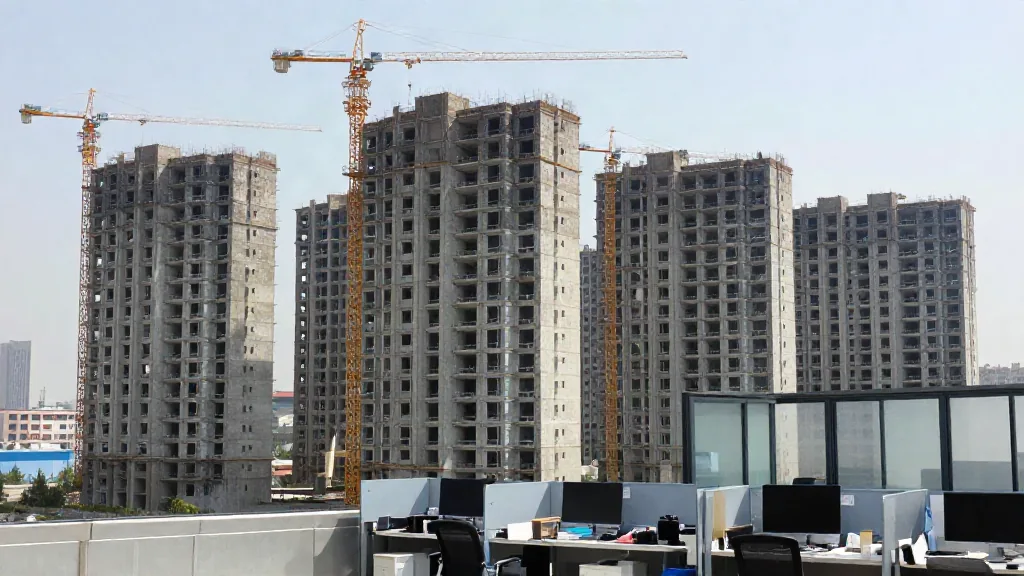
El precio de la vivienda en China se dispara durante febrero
El precio de la vivienda en China, tanto de nueva construcción como de segunda mano, registró un fuerte incremento durante el mes de febrero, algo que aviva los temores de que el país sufra una burbuja inmobiliaria.
Esto lo escribi hace tiempo:
http://www.dalamarblog.com/burbuja-inmo … -en-china/
Otras noticias:
http://www.idealista.com/news/archivo/2 … a-de-dubai
http://www.idealista.com/news/archivo/2 … o-estallar
http://www.idealista.com/news/archivo/2 … upa-al-fmi
http://www.idealista.com/news/archivo/2 … s-burbujas
Esto nos recuerda a que las burbujas duran mas de lo que todo el mundo se cree!
Guangzhou will have 2.2 million sqm of Grade A office space coming on stream in the next five years. It is natural that investors have some concern that vacancy rates will rise and put pressure on rents. However, 75% of Guangzhou’s Grade A office stock has been completed since 2005 and rents have proved to be resilient in that time. Our data show that annual rental growth in the past three years averaged 7.1% in the face of nearly 1.5 million sqm of new office space. In particular, in 2011, when a historic peak in annual supply of 630,000 sqm was delivered to the market, net absorption also reached a historic high at 550,000 sqm, with average rents rising by 9.4% y-o-y. On the other hand, in 2012, when leasing demand softened across China, rents retreated by 3.2% y-o-y.
Not surprisingly, part of this high quality office space was built for headquarters or pre-sold to cash-rich domestic Chinese occupiers, who continue to actively purchase bulk office space for self-use. That explains part of the correlation we have observed in China between speculative supply booms and net absorption.
China’s plan to tax home sales alarms market: Thousands of people in China are rushing to either buy or sell their properties. They are trying to avoid a new capital gains tax
“China’s local governments may have more than 20 trillion yuan ($3.2 trillion) of debt, former Finance Minister Xiang Huaicheng said, almost double the figure given in a 2011 report by the National Audit Office. The combined debt of China’s central governments and the nation’s provinces and cities may currently be more than 30 trillion yuan, Xiang, who served as finance minister from 1998 to 2003, said at the Boao Forum for Asia. Local governments had 10.7 trillion yuan of debt at the end of 2010, the auditor said in its report.”
Podria ser este el caso?
China’s "Ghost Cities": The Promise of Great Expectations
On the contrary, Keith believes China’s "ghost cities" herald great expectations.
"There are very real reasons why China builds these cities in advance. The Chinese government is expecting the greatest migration in human history, as over a billion people urbanize by 2020. We’re already several years in." Keith said, "The government has planned for this; they know people are coming and they’re building in advance."
In reality, China is expecting the "ghost cities" to be full within the next 35 years – a long bet by Western standards. The megalopolis of China’s East Coast is more or less at capacity, and so the Chinese government is seeking to build up its largely empty western regions.
"The other thing Western analysts don’t bother to understand is that the Chinese plan everything in five-year cycles." Keith said, referring to China’s famous Five-Year Plans.
"Two or three planning cycles ago, they created a 50-year initiative – the Go West Initiative – to plan for building up the country’s west, as opposed to their urban eastern seaboard. Everything west of Xi’an is a targeted economic zone." Keith said. "They’re just planning on timescales that Westerners don’t get."
China reported new home prices rose in April in the fewest cities in 1.5 years (44 of 70 cities down from 56 cities in March). The government has been trying to cool the housing market for for a few years. It is working, and now officials are relaxing their grip. Last week, the PBOC called on banks to expedite the granting of mortgages. It wants developers to cut prices to boost demand. Note that at its peak, the housing market is estimated to have accounted for nearly a quarter of China’s GDP.